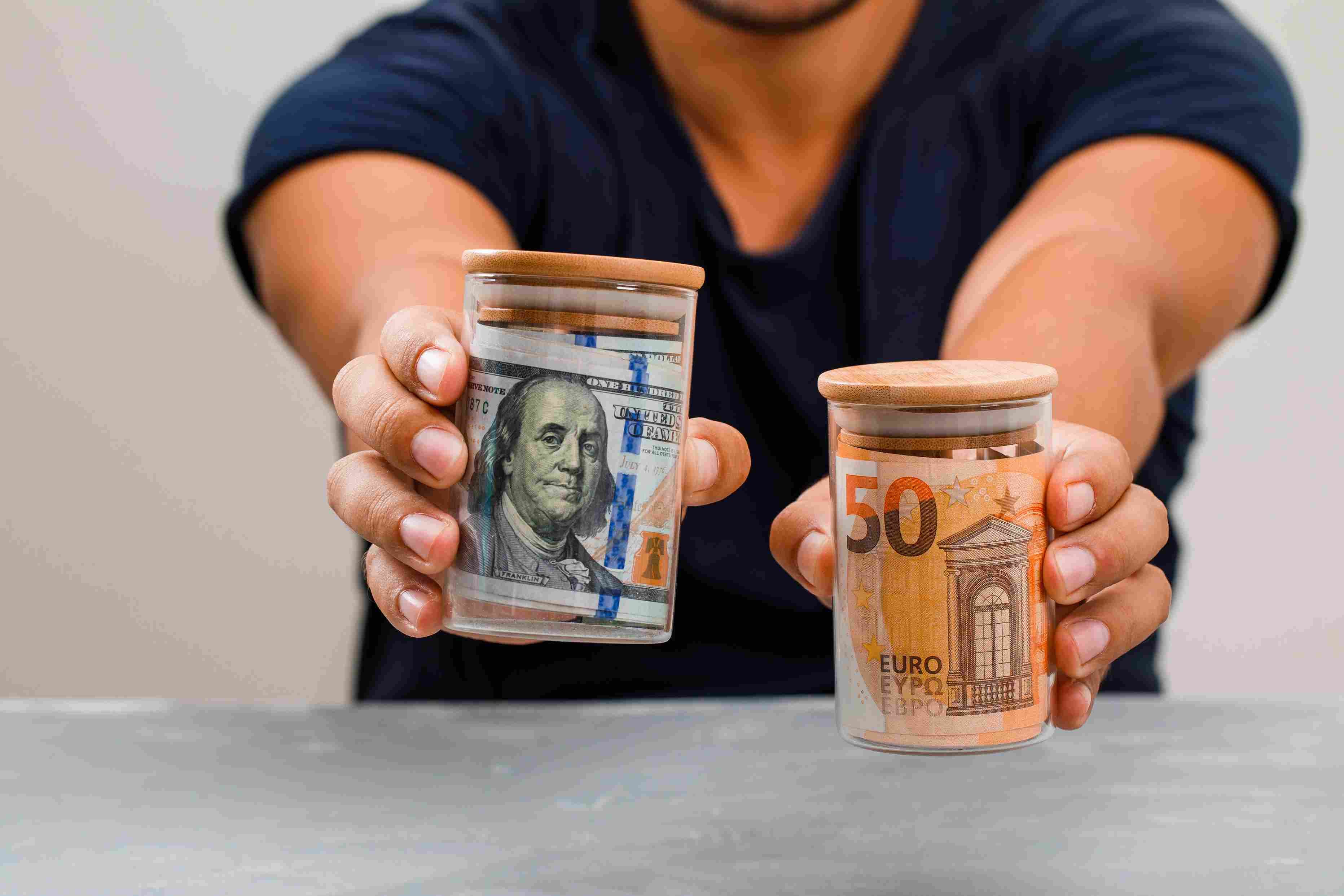
EUR/USD is the pair I would recommend to any trader who asked me where to start. It is also the pair I still trade the most, twenty years in.
There is a reason for this. EUR/USD is the most traded currency pair on the planet, accounting for roughly 22 percent of all daily forex volume according to the Bank for International Settlements 2025 Triennial Survey. That translates to over $2 trillion in notional volume changing hands every single day. This is the deepest, tightest, most predictable pair you can trade, and once you understand its personality, everything else about forex becomes easier.
Let me walk you through exactly how to trade it, using the market conditions as of now.
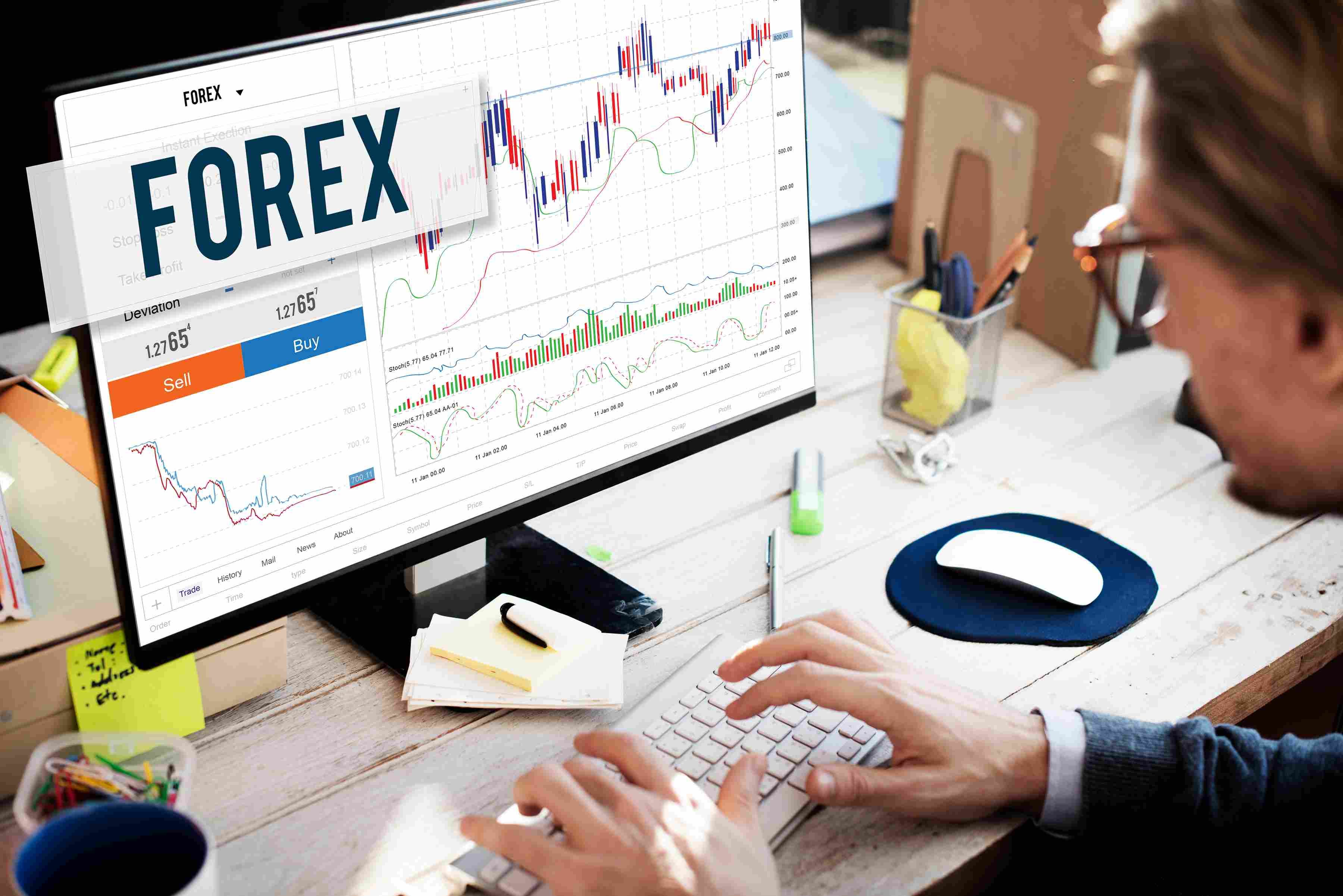
To trade EUR/USD, you buy Euros and sell US Dollars when you expect the Euro to strengthen against the Dollar, or you sell Euros and buy Dollars when you expect the opposite. The pair currently trades around 1.1570 as of now, having spent most of 2026 in a 1.14 to 1.18 range. Most trades are placed on MetaTrader 5, with spreads typically starting from 0.0 pips on Raw ECN accounts at brokers like ZeonFX. The two biggest drivers right now are the widening rate differential between the ECB and Fed, and the ongoing geopolitical risk in the Middle East affecting oil prices and German industrial output.
Every serious EUR/USD trader watches four things. Miss any of them and you are trading blind.
Central bank interest rates. This is the biggest one. The gap between what the Fed pays and what the ECB pays determines where large institutional money flows. As of early September 2026, the Fed sits at 3.75 percent while the ECB deposit rate holds at 2.00 percent. That 175 basis point differential still favours the Dollar in absolute terms, but the Fed has been cutting while the ECB has been holding. Each time that gap narrows, the Euro gains ground. Watch for the FOMC meeting on September 17-18 and the ECB meeting on September 11. Both could move the pair significantly.
Economic data releases. Non-Farm Payrolls (first Friday of every month), CPI inflation prints, GDP releases, and PMI data. Each of these can move EUR/USD 40 to 100 pips within minutes of release. The September 2026 NFP came in at 57,000, well below expectations, which is why the Dollar has been under pressure recently.
Geopolitical events. The renewed tensions in the Middle East through August 2026 have kept oil prices elevated, which hits Germany harder than the US. Germany imports most of its energy, so higher oil equals higher input costs equals weaker German industrial output equals a weaker Euro. Watch Brent Crude alongside EUR/USD if you want a leading indicator on some moves.
Risk sentiment. When global equity markets sell off, the Dollar tends to strengthen as a safe haven. When markets rally, the Euro gains. This is why some traders correlate EUR/USD with the S&P 500 for context.
Timing matters more than most beginners realise.
The best window is the London and New York session overlap, which runs from 12:00 to 16:00 UTC. This is when both major sessions are active, when spreads are tightest, and when actual institutional volume is flowing through the market. About 70 percent of my trades happen inside this four-hour window.
The London open at 07:00 UTC is the second best window. European traders come online, react to overnight news from Asia, and set the tone for the day. Big directional moves often happen in the first 90 minutes of the London session.
Avoid trading EUR/USD during the Asian session (roughly 22:00 to 06:00 UTC) unless you have a specific news-driven reason. Volume drops, spreads widen at Raw ECN, and price action tends to be choppy. You are more likely to get stopped out on noise than to catch a real move.
Also avoid the 15 minutes before and after any high-impact news release unless you specifically trade news. Spreads can widen from 0.1 pip to 5 pips or more in seconds, and price can spike 30 to 50 pips in either direction before settling.
Let me walk you through the type of setup I actually use, with rough numbers based on current September 2026 conditions.
Say EUR/USD has been trading between 1.1540 (support) and 1.1620 (resistance) for the past six sessions. The pair is currently at 1.1580, sitting in the middle of the range, and we are 30 minutes before the London open.
I would wait. I do not enter mid-range. The setup only becomes interesting near one of the two edges.
Let's say price drops to 1.1548 during the London open, just above the 1.1540 support. Volume is picking up. I would then look at the 15-minute chart for a rejection candle at support. If I see a hammer or a bullish engulfing pattern printing at 1.1550, I have a setup.
The trade:
If the trade works, you make around $145. If it fails, you lose $50. You do not need to win half your trades with that ratio. Even winning 40 percent of similar setups makes you profitable over time.
The key is that you did not chase the move mid-range. You waited for a defined edge, a defined risk, and a defined reward. Most losing traders do the opposite.
Because EUR/USD is so liquid, spreads stay tight most of the day. This creates a temptation to overtrade. Do not.
Set yourself a maximum number of trades per day (mine is three) and stop when you hit it, win or lose. Set a maximum daily loss (mine is 3 percent of the account) and stop for the day if you hit it. These rules exist because after three losses in a row, your judgment gets worse, not better.
Use a stop loss on every trade. Every single one. I know traders who have been at this ten years and still occasionally trade without a stop, and every one of them has a blow-up story. Do not become one of them.
Size your positions using the 1 percent rule. Never risk more than 1 percent of your account on any single trade. On a $1,000 account, that means never losing more than $10 on one trade. That sounds small until you realise it lets you survive 20 consecutive losses without wiping out. Which happens. Trust me.
As of the first week of September 2026, EUR/USD sits at 1.1570 and looks set for a volatile month.
The upside case: the September ECB meeting on the 11th could deliver a 25 basis point hike, according to a Reuters poll of 69 economists where 57 expect the move. If it happens, EUR/USD likely tests 1.1650 and possibly 1.1750 within the following week. Goldman Sachs and Deutsche Bank both hold year-end targets at 1.2500.
The downside case: if the Fed surprises with a September 17-18 hike (currently a 68 percent probability according to markets), or if Middle East tensions escalate further and push oil prices higher, the Dollar strengthens and EUR/USD could retest 1.1476 (the March 2026 low) or even 1.14.
Key levels to watch this month:
Trade the range until it breaks. Do not front-run a breakout without confirmation.
I see the same three mistakes constantly. Fix these and you are ahead of most retail traders.
Overleveraging. Just because your broker offers 1:500 leverage does not mean you should use it. A trader with $500 and 1:500 leverage can control $250,000. A 50 pip move against them wipes out half the account. Use leverage sparingly, especially on EUR/USD where daily ranges of 60 to 100 pips are normal.
Ignoring the calendar. Entering a trade three minutes before the Fed announcement is not trading, it is gambling. Check the economic calendar every morning and know what is coming. ZeonFX has a free economic calendar in the Tools section that shows every impact-rated event.
Averaging down on losers. Adding to a losing position feels like conviction. It is actually the fastest way to blow up an account. If your original thesis was wrong, adding more capital to it does not make it right. It just makes the loss bigger.
What is the best time to trade EUR/USD? The London and New York session overlap (12:00 to 16:00 UTC) is the best window because both major sessions are active, liquidity peaks, and spreads are tightest. The London open (07:00 UTC) is the second best window.
How much money do I need to trade EUR/USD? You can technically start with $50 on a Standard account at ZeonFX. Realistically, you need at least $500 to $1,000 to size positions properly using the 1 percent risk rule without overleveraging. Anything smaller and you cannot survive a normal losing streak.
What is a good stop loss for EUR/USD? Stop loss size depends on your entry and the setup, but for intraday trades a 15 to 30 pip stop is typical. Longer-term swing trades might use 50 to 100 pip stops. Never trade EUR/USD without a stop loss, whatever the size.
Is EUR/USD easier to trade than other pairs? EUR/USD is generally more forgiving for beginners because it has the tightest spreads (from 0.0 pips at Raw ECN brokers like ZeonFX), highest liquidity, and most predictable behaviour. It also has more analysis and educational content written about it than any other pair.
Can I trade EUR/USD on weekends? No. EUR/USD is a currency pair and forex markets close over the weekend, from Friday 22:00 UTC to Sunday 22:00 UTC. Only crypto CFDs trade 24/7 at ZeonFX. If you want weekend exposure to price movement, look at crypto instead.
What leverage should I use on EUR/USD? Most professional traders use 1:10 to 1:20 effective leverage even when brokers offer 1:500. Effective leverage means your total open position size relative to your account. Just because you can access 1:500 does not mean you should use it. Higher leverage magnifies losses just as much as gains.
Risk Disclosure
Trading EUR/USD and other forex currency pairs involves a high level of risk and may not be suitable for all investors. Between 74 and 89 percent of retail forex and CFD accounts lose money according to European regulatory data. Leveraged trading can result in losses that exceed your initial deposit, mitigated at ZeonFX only by negative balance protection which ensures your account cannot fall below zero. Price levels, targets, and scenarios described in this article are based on market conditions as of now and are for educational purposes only. They do not constitute investment advice or a recommendation to enter any specific trade. Past performance is not indicative of future results.