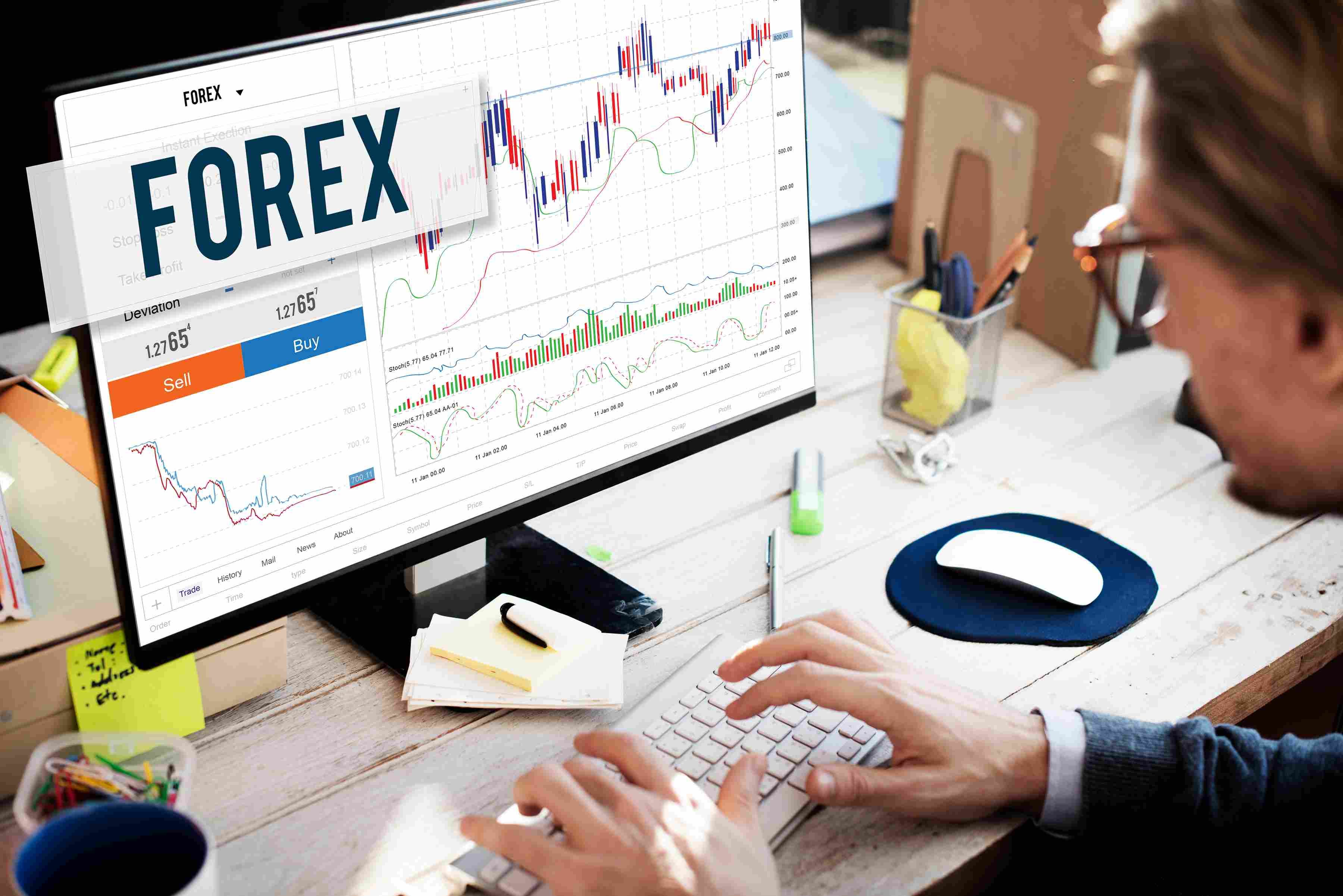
If you have ever exchanged your home currency for holiday money at an airport, you have already done forex trading. Just at a very small scale, and with terrible pricing.
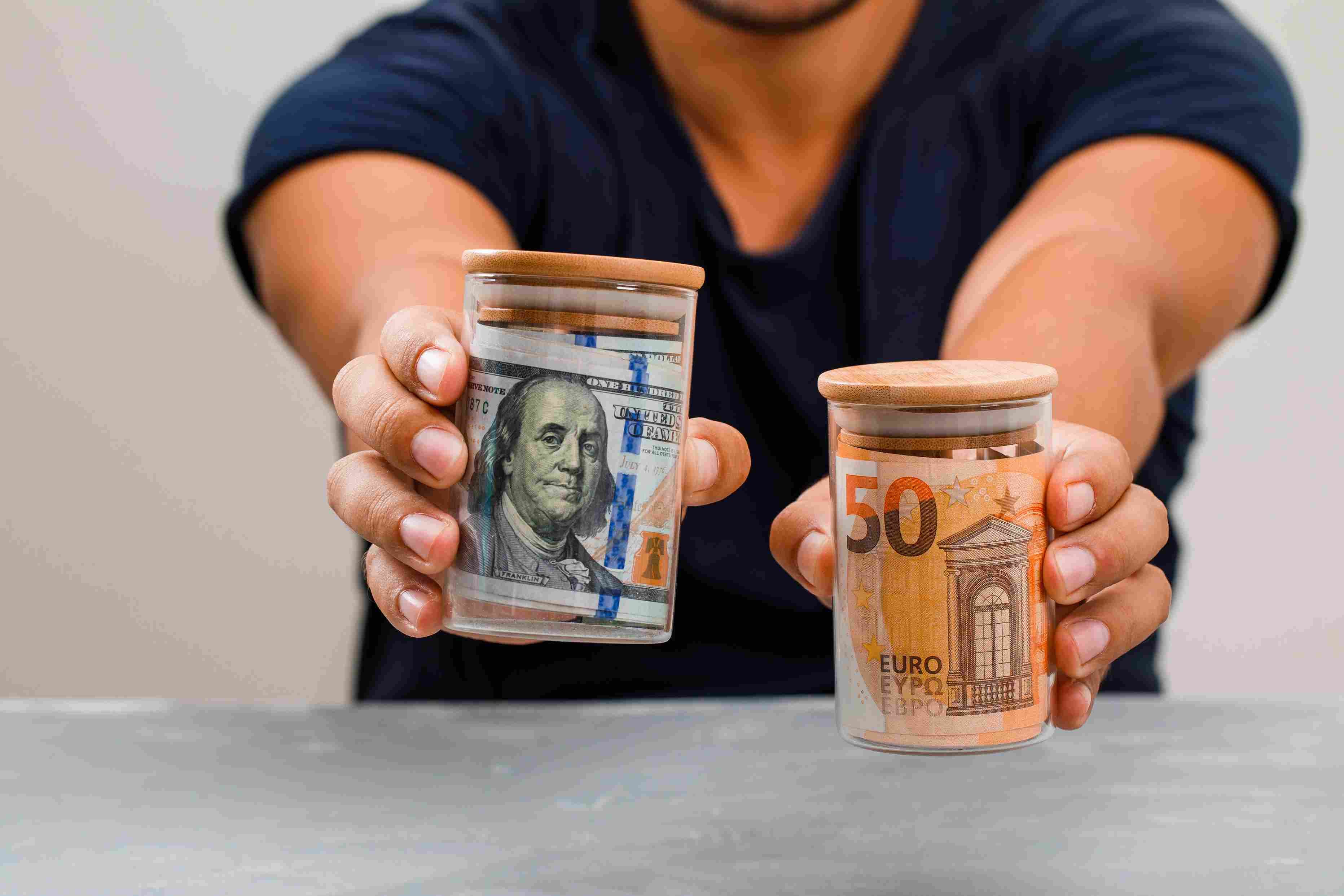
Forex trading is the buying of one currency while simultaneously selling another, with the goal of profiting from the change in exchange rate between them. That is the whole idea, stripped of every buzzword you will read elsewhere. When I say I am "long EUR/USD," I am telling you I bought Euros and sold US Dollars, and I make money if the Euro rises against the Dollar between when I entered and when I exit.
So let me walk you through the rest, honestly, without the usual marketing language most broker blogs push at beginners.
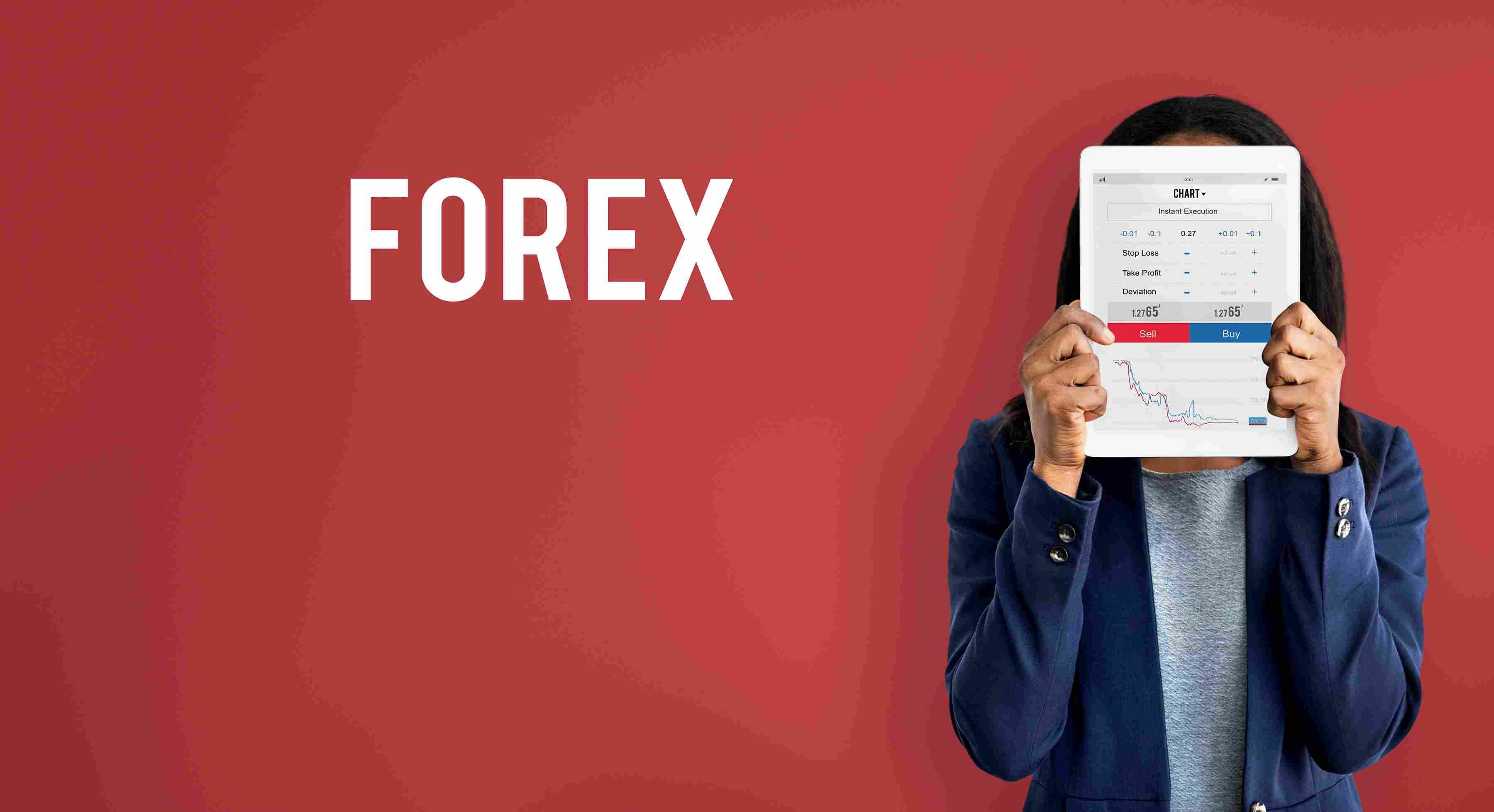
Forex trading, also called FX trading or foreign exchange trading, is the exchange of one national currency for another on the global over the counter market. Traders profit from price movements between currency pairs like EUR/USD, GBP/USD, or USD/JPY. The market runs 24 hours a day, five days a week, and processed an average of $9.51 trillion in daily turnover in April 2025 according to the Bank for International Settlements Triennial Survey (final data released June 2026). That figure is up 27 percent from $7.5 trillion in 2022, making forex by far the largest financial market on the planet.
Every forex trade involves two currencies at once. That is because a currency has no value on its own. It only has value relative to another currency.
Here is what a real trade looks like.
Say the EUR/USD price is quoted at 1.0850. That means one Euro costs 1.0850 US Dollars. If you buy one standard lot of EUR/USD (which is 100,000 units of the base currency), you are essentially buying 100,000 Euros and paying 108,500 US Dollars for them.
Now imagine the price moves to 1.0900 an hour later. Each Euro is now worth 1.0900 US Dollars. You sell your position. You get back 109,000 US Dollars for the 100,000 Euros you held. Your profit is 500 US Dollars on a 50 pip move.
That is the basic mechanic. Every forex trade is a bet on which of two currencies will strengthen against the other. You do not need to own the underlying currencies at ZeonFX, because you trade forex as a Contract for Difference (CFD). The broker handles the settlement. You just take the price movement, up or down.
There are roughly 180 currencies in circulation globally. But retail traders focus on a much smaller set.
Major pairs are the seven most liquid pairs, all involving the US Dollar. EUR/USD alone accounts for around 22 percent of daily forex turnover. USD/JPY is second at 13.5 percent. GBP/USD is third at 9.5 percent. The US Dollar appears on one side of roughly 88 percent of all forex trades worldwide. That is why every serious forex trader watches Fed announcements even if they never trade the Dollar directly.
Minor pairs cross two major currencies without involving the Dollar. Think EUR/GBP or EUR/JPY. Spreads are wider than majors but they still trade actively during their respective sessions.
Exotic pairs cross a major currency with a smaller economy's currency, like USD/TRY (Turkish Lira) or USD/ZAR (South African Rand). Wide spreads, high volatility, not where new traders should start.
Forex is not one market. It is a network of participants trading with each other through banks, brokers, and electronic communication networks.
At the top sit the big commercial banks, central banks, hedge funds, and multinational corporations. These are the players moving trillions per day for reasons that have nothing to do with speculation. Multinationals hedge currency exposure on international revenue. Central banks intervene to stabilise their currencies. Hedge funds run macro strategies. This flow provides most of the market's liquidity.
Retail traders like you and me sit at the bottom of the food chain. According to the BIS 2025 data, retail driven turnover is around $242 billion daily, roughly 2.5 percent of the total. That is a small share of a huge pie. Which is actually good news, because it means retail traders can enter and exit positions any time without their orders moving the market.
The forex market runs 24 hours a day from Sunday evening (22:00 UTC when Sydney opens) through Friday evening (22:00 UTC when New York closes). But not all hours are equal.
Trading follows the sun across four main sessions.
Sydney session (22:00 to 07:00 UTC) is the quietest. Thin liquidity, wider spreads.
Tokyo session (00:00 to 09:00 UTC) picks up when Asian markets get involved. JPY pairs and AUD/JPY move here.
London session (07:00 to 16:00 UTC) is the giant. London handles 38 percent of global forex turnover. When London opens, the European pairs (EUR, GBP, CHF) come alive.
New York session (12:00 to 21:00 UTC) brings the second biggest wave of volume. The 12:00 to 16:00 UTC London and New York overlap is when spreads are tightest, liquidity is deepest, and most major moves happen. If you can only trade for a few hours a day, trade this window.
Two things determine your outcome on any trade. Direction and size.
Direction is which way the pair moved after you entered. If you bought and price rose, or you sold and price fell, you made money.
Size is how much of your account you put behind the trade. This is where leverage enters the picture, and where most new traders get themselves in serious trouble.
Leverage lets you control a larger position with a smaller amount of your own money. At ZeonFX, forex traders can access up to 1:500 leverage. That sounds appealing until you understand what it actually means.
With 1:500 leverage, a $200 deposit can control a $100,000 forex position (one standard lot). If EUR/USD moves 50 pips in your favour, you make $500. Great return on $200. But if it moves 50 pips against you, you lose $500. You just lost more than twice your account balance on a routine daily move.
This is why negative balance protection matters. At ZeonFX, your account cannot fall below zero no matter what happens in the market. But protection from going negative is not protection from losing your deposit. That happens fast when leverage is misused.
Here is the statistic every forex blog buries at the bottom or leaves out entirely. Between 74 and 89 percent of retail forex and CFD traders lose money. That range comes from mandatory disclosures every broker in the European Union must publish, aggregated by ESMA across dozens of firms. In the UK, the FCA has published similar findings. In the US, the CFTC data tells the same story.
After one year of trading, only 10 to 15 percent of retail accounts remain profitable. After five years, that drops to 5 to 7 percent.
I am telling you this not to scare you off, but because you deserve to make an informed decision. Forex trading can be profitable. It is a legitimate skill. But so is professional poker, and nobody starts playing $1,000 hands on their first day.
The traders who survive have three things in common in my experience. They size positions tiny compared to their account. They accept small losses without arguing with the market. They treat trading like a job that requires years of practice, not a shortcut to money.
The forex market has grown 27 percent in three years, from $7.5 trillion in 2022 to $9.51 trillion in 2025. A big part of that growth comes from FX derivatives (swaps, forwards, options) which now account for more than half of daily volume, driven by hedging demand as global volatility rose through 2024 and 2025.
For retail traders, the practical impact is deeper liquidity, tighter spreads on major pairs, and more accessible pricing on multi asset accounts. A trader with $100 in 2026 can access institutional grade execution and pricing that hedge funds paid brokers for a decade ago.
Realistically, five things.
A regulated or well established broker. Someone who segregates your funds, offers negative balance protection, and gives you access to real market pricing. Read broker disclosures before you fund an account.
An account and a platform. ZeonFX offers Standard accounts from $50 and Raw ECN accounts from $100, both on MetaTrader 5. Start with a demo account for at least a month before funding a live one.
A basic understanding of what moves currency prices. Central bank interest rates, inflation prints, employment data, geopolitical events. You do not need to be an economist. You just need to know when major news drops.
A risk management plan. Never risk more than 1 to 2 percent of your account on any single trade. Use stop losses on every trade. Do not average down on a losing position.
Patience. Real trading education takes years. If you rush this, the statistics above become your statistics.
Is forex trading legal? Forex trading is legal in most countries, including Malaysia, Indonesia, Philippines, Nigeria, South Africa, Saudi Arabia, Brazil, and Mexico among many others. Some countries restrict retail forex trading or require brokers to hold local licences. Check your local regulations before you start.
How much money do I need to start forex trading? You can open a forex trading account at ZeonFX with a $50 minimum deposit on the Standard account, or $100 on Raw ECN. Realistically, most professional traders recommend starting with at least $500 to $1000 so you can size positions properly without over leveraging. Anything smaller and you are essentially playing lottery tickets.
Can I make a living from forex trading? Some traders do, but they are a small minority. Data suggests 5 to 7 percent of retail traders achieve consistent profitability after five years. Making a full living requires substantial capital, years of experience, and treating trading as a serious profession with defined risk rules.
Is forex trading gambling? It depends how you approach it. Without a strategy, risk management, or edge, forex trading is worse than gambling because you also pay spreads and commissions. With proper education, discipline, and a defined strategy, it becomes speculation with a risk edge, similar to how professional poker players approach poker.
What is the best forex pair for beginners? EUR/USD is generally recommended for new traders because it has the tightest spreads, highest liquidity, and most stable behaviour of any pair. It also has the most educational content and analysis written about it, making learning easier.
Do I need to watch the market all day? No. Different trading styles suit different schedules. Day traders watch the market for a few hours during their preferred session. Swing traders check charts once or twice a day. Position traders may hold trades for weeks. Choose a style that fits your life, not the other way around.
I have watched too many people fund a forex account after watching one YouTube video, blow the account in three weeks, and walk away convinced the whole market is rigged. It is not rigged. They just skipped the education part.
If you are serious about this, spend the next three months on a demo account. Read one book on trading psychology. Learn how to calculate position size properly. Then, and only then, fund a live account with money you can genuinely afford to lose.
The market has been here for decades and will be here tomorrow. There is no rush.
Risk Disclosure
Trading forex and Contracts for Difference (CFDs) involves a high level of risk and may not be suitable for all investors. Between 74 and 89 percent of retail CFD accounts lose money according to European regulatory data. Leveraged trading can result in losses that exceed your initial deposit, mitigated at ZeonFX only by negative balance protection which ensures your account cannot fall below zero. Past performance is not indicative of future results. You should carefully consider your investment objectives, level of experience, and risk tolerance before trading. Content in this article is educational and does not constitute investment advice.