If forex were a family, the seven major currency pairs would be the ones you actually recognise at the reunion. The other 100+ pairs exist, but nobody's really paying attention to them.
I have traded every one of the majors at some point over the last two decades. Each one has its own personality, its own rhythm, and its own quirks. Some are boring but reliable. One is dramatic. Two are basically the same trade dressed up in different currencies. Understanding these differences saves you from making trades that do not suit your style, and points you toward the pairs that actually fit how you think.
This is a straight talk guide to the seven majors, based on current September 2026 conditions.
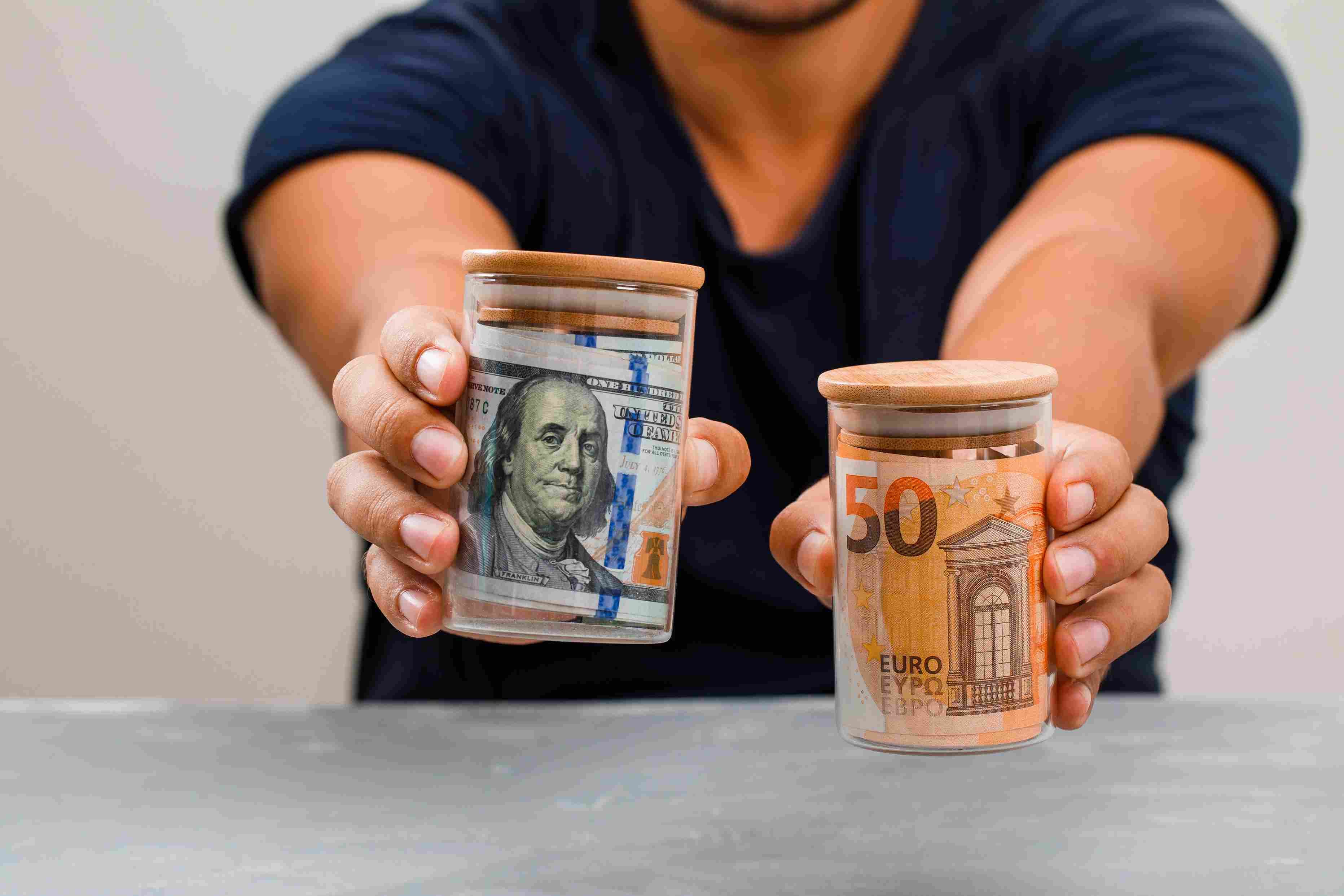
Major currency pairs are the seven most heavily traded currency pairs in the global forex market, all of which include the US Dollar on one side. They are EUR/USD, GBP/USD, USD/JPY, USD/CHF, AUD/USD, USD/CAD, and NZD/USD. Together they account for roughly 75 percent of all forex trading volume, out of a total daily market turnover of $9.51 trillion as reported by the Bank for International Settlements 2025 Triennial Survey (final data published June 2026). The Dollar appears on one side of approximately 88 percent of all forex trades globally, which is why every serious forex trader watches Federal Reserve decisions even if they trade currencies that seem unrelated.
Three things separate a major from every other pair on the platform.
First, volume. Majors have massive daily turnover, which means tight spreads, deep liquidity, and easy entries and exits. On a Raw ECN account at ZeonFX, EUR/USD spreads start from 0.0 pips. Compare that to an exotic pair like USD/TRY where spreads can be 40 pips wide, and you understand why traders stick to majors.
Second, the US Dollar. Every major pair includes USD. This is not a coincidence. The Dollar is the world's reserve currency, and roughly 60 percent of global central bank foreign exchange reserves are held in Dollars.
Third, stable liquidity across sessions. Majors trade actively during at least one of the three main sessions (London, New York, or Asian), and most trade well across two or three. This gives you flexibility on when you can be at your desk.
Current price (September 8, 2026): 1.1628 Share of daily forex volume: roughly 22 percent, more than any other pair
EUR/USD is the pair I recommend to anyone starting out. It has the tightest spreads, the highest liquidity, and the most predictable behaviour of any pair. When people talk about forex trading, this is usually the pair they mean.
The Euro tracks eurozone economic health across 20 member countries, dominated by the German and French economies. The Dollar tracks US economic health. The interest rate gap between the ECB and Fed is currently 150 basis points (Fed at 3.50 to 3.75 percent, ECB at 2.25 percent), and this differential drives most of the pair's medium term direction.
Personality: disciplined and technical. Respects support and resistance levels well. Gives you clean setups. Best sessions: London and New York overlap (12:00 to 16:00 UTC). Watch this month: the ECB meeting on September 10 and the FOMC meeting on September 15-16. Both could move the pair 100+ pips.
Current price (September 8, 2026): around 1.3520 Nickname: Cable (from the transatlantic cable that first carried the quote in the 1800s)
If EUR/USD is the disciplined older sibling, GBP/USD is the one who came home at 3am and still has energy. This is one of the most volatile major pairs, with daily ranges 20 to 40 percent larger than EUR/USD on average.
The Pound reacts sharply to Bank of England decisions (BoE is currently at 3.75 percent, matching the Fed), UK inflation data, and any political headline out of Westminster. Brexit is still generating ripple effects six years on, and every UK budget release causes noise.
Personality: volatile, moody, punishing to overleveraged traders. Rewards patience and sizing discipline. Best sessions: London open (07:00 UTC) is prime time. Volatility drops sharply into the Asian session. Watch this month: BoE meeting on September 17. A hike would push Cable higher; a hold could stall recent momentum.
Current price (September 8, 2026): around 156.30 Share of daily forex volume: roughly 13.5 percent, third most traded pair
USD/JPY is the pair I find most interesting to watch because the Yen behaves fundamentally differently from every other major currency. Japan has kept interest rates near zero for decades. That policy has made the Yen a preferred funding currency for the "carry trade," where traders borrow Yen at low rates and invest in higher yielding currencies.
When global markets are calm and risk appetite is on, carry trades expand and Yen weakens (USD/JPY rises). When markets panic, carry trades unwind fast and the Yen strengthens sharply (USD/JPY falls). This is why USD/JPY often moves inversely to equity indexes.
Personality: complex, driven by risk sentiment and interest rate differentials. Prone to sharp reversals during risk off events. Best sessions: Asian session (Tokyo open at 00:00 UTC) has the most action, with US session covering the second wave. Watch this month: Bank of Japan meeting scheduled for the third week of September. Any hint of policy tightening moves the Yen violently.
Current price (September 8, 2026): around 0.8088 Nickname: Swissie
USD/CHF is the pair most traders ignore until a crisis hits. Then everyone remembers Switzerland exists.
The Swiss Franc is a classic safe haven currency, similar to the Yen. When war breaks out, when a bank fails, when markets sell off hard, capital flows into Swiss Francs. USD/CHF then drops (Franc strengthens). During calm periods, it tends to move inversely to EUR/USD but with lower volatility.
Personality: boring most days, then suddenly critical during crises. Best sessions: European session because of Swiss geographic proximity. Watch this month: Middle East tensions have been elevated through August 2026. Any escalation strengthens the Franc.
Current price (September 8, 2026): around 0.7220 Nickname: Aussie
The Australian Dollar is a commodity currency. Australia exports iron ore, coal, and natural gas at massive scale, mainly to China. When commodity prices rise or Chinese demand picks up, AUD strengthens. When commodities fall or China slows, AUD weakens.
AUD is also a "risk on" currency, meaning it rises when global risk appetite is strong (equity markets up) and falls when risk aversion takes over. Combine both drivers and you get a pair that moves with a fairly predictable set of fundamentals.
Personality: cyclical, sensitive to Chinese economic data and commodity prices. Best sessions: Asian session for the Sydney open, with continued activity into London. Watch: Chinese manufacturing PMI, iron ore prices, and Reserve Bank of Australia decisions.
Current price (September 8, 2026): around 1.3817 Nickname: Loonie (after the Canadian coin with a loon on it)
The Canadian Dollar tracks oil prices more closely than almost any currency tracks any commodity. Canada is one of the world's largest oil exporters, and roughly 20 percent of Canadian exports go to US refiners.
When WTI Crude prices rise, CAD strengthens (USD/CAD falls). When oil falls, CAD weakens (USD/CAD rises). The correlation is not perfect, but it holds well enough that many CAD traders check the oil chart before the currency chart.
Personality: correlated with oil, plus sensitive to Bank of Canada decisions and North American economic data. Best sessions: North American session, especially around US and Canadian data releases. Watch this month: oil prices given ongoing Middle East tensions, plus any Canadian employment or inflation surprises.
Current price (September 8, 2026): around 0.5895 Nickname: Kiwi
The New Zealand Dollar is a smaller cousin of the Australian Dollar. Like AUD, it is a commodity currency and a risk on currency. Unlike AUD, New Zealand's economy is much smaller and its currency has lower liquidity, so spreads are slightly wider and moves can be more volatile per unit of news.
NZD tends to track AUD closely. Correlation between the two pairs runs around 0.85 on most timeframes.
Personality: thinner liquidity than the other majors, so requires slightly tighter risk management. Best sessions: Asian session. Watch: dairy prices (yes, really, dairy is a major New Zealand export), Reserve Bank of New Zealand decisions, and AUD/USD as a proxy.
Here's how the seven majors stack up on the three things that matter most: how much daily volume they see, how much they typically move, and what personality they bring to your screen.
Start with EUR/USD. Every serious analyst, educator, and long term trader will tell you the same thing, for good reason. It has the tightest spreads, the most educational content available, the most predictable behaviour, and the highest liquidity. You will make mistakes learning to trade. Better to make them on the pair that costs the least to trade.
Once you can consistently manage risk on EUR/USD across a full month of trading, consider adding one more pair that fits your schedule. Trade during the London session? GBP/USD is a natural fit. Trade Asian hours? USD/JPY makes sense. Watch commodities anyway? AUD/USD.
Never try to trade all seven at once as a beginner. You will spread your attention too thin, miss important context on each pair, and end up trading noise instead of signal.
How many major currency pairs are there? There are seven major currency pairs: EUR/USD, GBP/USD, USD/JPY, USD/CHF, AUD/USD, USD/CAD, and NZD/USD. All seven include the US Dollar. Some traders count only four (EUR/USD, GBP/USD, USD/JPY, USD/CHF) as the strict majors and call the other three commodity pairs, but the seven-pair definition is more common.
What is the difference between major and minor currency pairs? Major pairs include the US Dollar on one side. Minor pairs (also called cross pairs) do not include the Dollar. Examples of minor pairs include EUR/GBP, EUR/JPY, GBP/JPY, and AUD/NZD. Majors have tighter spreads and higher liquidity; minors trade actively but at slightly wider spreads.
Which major pair is the most volatile? GBP/USD is generally the most volatile major pair, with daily ranges often 20 to 40 percent larger than EUR/USD. USD/JPY comes second, especially during risk-off events. USD/CHF is the least volatile day to day.
Which major pair has the tightest spreads? EUR/USD has the tightest spreads of any currency pair globally. At ZeonFX, Raw ECN accounts show EUR/USD spreads starting from 0.0 pips. USD/JPY and GBP/USD follow closely behind.
Can I trade major currency pairs 24 hours a day? Major pairs can be traded 24 hours a day from Sunday evening (22:00 UTC) to Friday evening (22:00 UTC). However, liquidity and spreads vary significantly by session. The London and New York overlap (12:00 to 16:00 UTC) is the most active window for European and North American pairs. USD/JPY is more active during the Asian session.
Should I trade multiple major pairs at once? Beginners should focus on one pair (usually EUR/USD) until they achieve consistency. Experienced traders often trade two or three pairs, especially when the pairs have low correlation (for example, EUR/USD and USD/JPY, which typically move independently). Trading correlated pairs simultaneously (like EUR/USD and GBP/USD, which usually move in the same direction) doubles your risk exposure without doubling your opportunity.
Risk Disclosure
Trading major currency pairs and CFDs involves a high level of risk and may not be suitable for all investors. Between 74 and 89 percent of retail forex and CFD accounts lose money according to European regulatory data. Leveraged trading can result in losses that exceed your initial deposit, mitigated at ZeonFX only by negative balance protection which ensures your account cannot fall below zero. Price levels quoted in this article are based on market conditions as of September 8, 2026 and are for informational purposes only. They are not recommendations to enter any specific trade. Past performance is not indicative of future results.